
Coppercoat vs Hard Racing Antifoul, a back to back test.
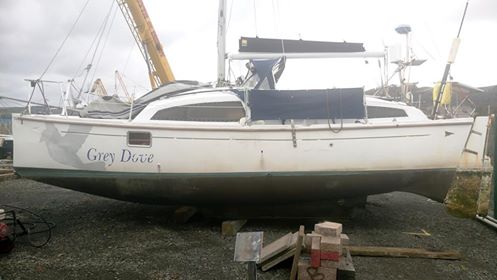
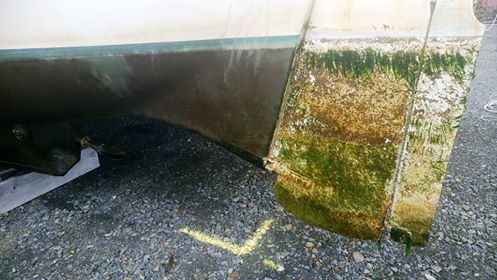
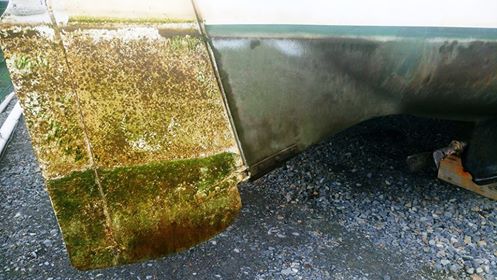
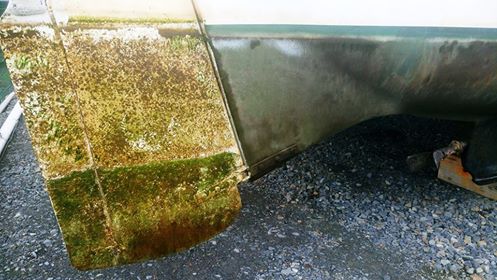
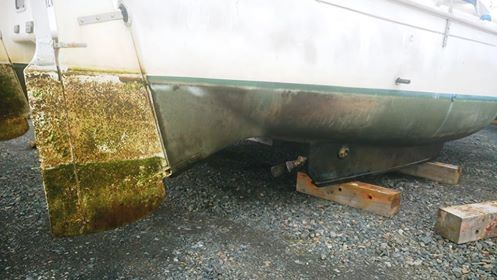
When people decide to apply Coppercoat, obviously it's rare that they leave any areas treated with traditional antifoul, giving a comparison of performance. However in this case the owner decided that, due to the poor condition of his rudders, he would just apply traditional, white hard racing antifoul to them. Please bear in mind, the rudders had been cleaned 3 times.... the pictures below show the difference in fouling and speak for themselves.
"Having CopperCoated the hull on my catamaran Grey Dove I was unable to do the rudders because the 300 bar pressure washer would have damaged them, so I applied a proprietary hard white racing anti-foul on them instead, giving a great opportunity for a rigorous comparison. She was launched in Rochefort on the 1st June and sailed home to Fife in Scotland over the next 10 weeks, via La Rochelle, Ile de Yeu, Belle Isle, Douarnenez, Camaret, Brest, L'AberW'rach, Guernsey, Cherbourg, Brighton, Dover, Ramsgate, Wells, Hartlepool, Whiby, Amble, Anstruther and Port Edgar, an eclectic mix of ports, rivers, drying harbours and sea conditions. During that time we had to scrub the rudders 3 times. On lifting 4 weeks after our arrival on the Firth of Forth the Copper-Coated hulls had only the slightest hint of slime on them. As for the rudders....Yuk! So glad I made the effort to apply CopperCoat.
Do I need to remove old anti fouling first or can it be applied straight on top?
Hi Steve, apologies for the late reply. Its always best to contact us directly on info@coppercoat.com. 100% of the old anti-fouling will need to be removed as Coppercoat (a two pack coating) cannot be applied on top of any single pack ablative coating, as this is designed to fall off!
If you require further info, please contact us on info@coppercoat.com